
Dongyi Zhao, Xi'an Tiangong Electric Co.,Ltd., Xi'an,China
Yugang Ge, Xi'an Tiangong Electric Co.,Ltd., Xi'an,China
Xingjun Ren, Xi'an Tiangong Electric Co.,Ltd., Xi'an,China
Zhen Lin, Xi'an Tiangong Electric Co.,Ltd., Xi'an,China
Yuanyuan Liu, Xi'an Tiangong Electric Co.,Ltd., Xi'an,China
With the development of multiterminal DC networks, various technical solutions for HVDC circuit breaker (HVDC CB) technology are being extensively and deeply researched. As an essential component of HVDC CB, metal oxide varistors (MOV) are commonly used to energy absorption branch (EAB) and limit overvoltage surges during switching events. The new application of MOV requires new testing techniques and evaluation procedures to ensure the long-term stability of the EAB of HVDC CB under specific repeated current impulse. This article conducted a simulation test on the uneven distribution of impulse current throughout the entire life cycle of a HVDC CB EAB unit in a typical case. The test results indicate that by selecting the appropriate size and energy absorption density of MOV, the expected operating life of the EAB of HVDC CB can be guaranteed. Due to the facts that these behaviors of MOV are rarely reported in the literature and not covered by their data sheets, this study provides one of the first publicly available full life cycle test data, addressing the insufficient understanding of the main component of the EAB, MOV, in the application of HV DCCB.
High voltage DC circuit breaker (HV DCCB); Metal Oxide Varistors (MOV); Energy absorption branch (EAB); Uneven current distribution coefficient β; Repetitive current impulse.
At present, the HVDC power systems in the world have not yet formed a transmission and distribution network like AC power systems. The technical bottleneck of HVDC circuit breakers (HVDC CB) seriously restricts the development of HVDC power systems into a large-scale power grid topology [1]. To isolate a fault in a DC circuit breaker, it is necessary to first detect and identify the fault location through the DC control protection of the converter station and then isolate the fault line by the action of a HVDC CB with the ability to cut off DC current. Due to material and technical reasons, there is currently no truly meaningful research on HVDC CBs, and the main technical solutions for HVDC CB functions are mainly used in domestic and foreign engineering applications [2]. The topology principle of HVDC CBs is complex and diverse. According to the form of breaking DC current and its structural characteristics, they can be divided into mechanical, solid-state, hybrid, and other forms of HVDC CBs derived from them [3] [4] [5] [6]. Regardless of the scheme used, the energy dissipation branch of the DC circuit breaker - Metal Oxide Varistor (MOV) circuit must be configured to absorb the energy stored in the DC grid reactor and limit the Transient Interruption Voltage (TIV) level during switching when interrupting DC fault currents [7, 8].
The scholars and experts have conducted extensive experimental research on the energy dissipation branch of HVDC CBs and their metal oxide varistor (MOV) components. Maike Broker et al. [9] developed a multiple impulse current energy testing device, which injects 60~100 J/cm³ of impulse energy into MOV samples while permanently applying DC voltage and withstands >10000 Repetitive energy impulse tests. Peter Hock et al. [10] proposed technical requirements for the application of HVDC CBs to MOVs, and studied the characteristics of column current sharing, temperature rise, energy treatment, and accelerated aging using DC metal oxide varistors. Yang Bing et al. [7] used the Zhangbei ± 500kV flexible DC project in China as an example to simulate and calculate the voltage/current time waveform diagram and rated energy absorption value of the energy consuming branch. They also conducted research on the consistency key technology of multi-stage MOV series parallel connection, especially the energy equivalent and multi column current equalization testing methods. Xinyi Wang et al. [11] dynamically simulated and calculated a hybrid DC circuit breaker system, built an impulse accelerated aging test platform, and conducted failure analysis on macroscopic parameters and microscopic structures. They proposed that nonlinear coefficients can be used as aging criteria for MOV's "sleeping component". Nadew Adisu Belda et al. [12] established a DC circuit breaker test device based on active current injection technology in a high-power laboratory and studied the performance limit of MOV with an energy density of 70~220 J/cm3 injected at a temperature of up to 250°C until MOV failure and then searched for its failure mechanism. Chunmeng Xu et al. [13] conducted 3500 endurance tests on the energy dissipation branch of a 12kV DC circuit breaker through online monitoring. Chen Long et al. [14] proposed Fréchet distance as a standard tool for evaluating the similarity of dynamic volt ampere characteristics of MOVs, and studied the effects of short-term, dual energy impulse on MOVs during on-off on (O-C-O) operation of DCCB.
Weijiang Chen et al. [8] summarized the practical application of various high-voltage DC circuit breakers used in China's multi-terminal flexible DC demonstration projects. Li Jinbu et al. [15] introduced the on-site breaking characteristics of HVDC CBs for three different technical routes of the ±500kV Zhangbei flexible DC project, verified that the DC circuit breaker can reliably cut off the fault DC current within 3ms, and also pointed out the problems that exist in the opening and closing process of HVDC CBs for different technical routes. Peng Zhaowei et al. [16] proposed a hybrid high-voltage direct current circuit breaker energy dissipation branch fault detection method based on Empirical Fourier Decomposition (EFD). Gao Jie et al. [17] proposed a fault detection method based on Multivariate Variable Mode Decomposition (MVMD) and differential bias.
The above research results have greatly promoted the technological progress of the energy absorption branch of HVDC CBs to a certain extent. Although many scholars have also devoted their efforts to researching online monitoring technology for energy absorption branches of HVDC CBs, and have even carried out on-site demonstration applications [18] [19]. However, there is still a lack of in-depth research on the variation patterns of MOV characteristic parameters throughout the entire life cycle of the energy absorption branch of HVDC CBs, especially the uneven distribution of impulse current between multiple MOV columns that arises from the variation of these characteristic parameters.
The rest of this article is arranged as follows: Section 1 describes the working principle, structural characteristics, and impulse voltage/current waveforms of high-voltage DC circuit breakers during operation of energy dissipation branches. In Section 2, a 4-post impulse current generator is built, and a test plan and program were designed. Section 3: Implement the test plan and conduct full life cycle diversion tests on two sets of energy consuming branches, providing test data and waveform diagrams. Section 5 provides detailed test data and result analysis, discussing the relationship between the variation trend of MOV characteristic parameters and the uneven distribution of switching impulse current between multi column MOV columns. The final section summarizes this article.
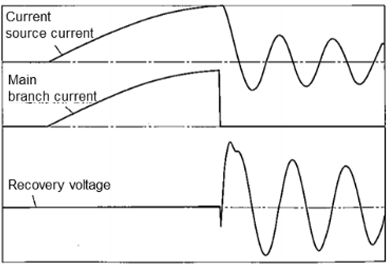
The typical topology structures of HVDC CBs are divided into mechanical, power electronic, and hybrid types. [3,4] Mechanical DC circuit breakers generally consist of a breaking device (CB), a converter capacitor (C), a converter reactance (L), a triggering device (G), and an energy absorbing device (MOV); Power electronic DC circuit breakers are generally composed of power electronic devices (S) and energy absorbing devices (MOVs); A hybrid DC circuit breaker generally consists of a fast isolating switch (FD), an auxiliary DC switch (FS), a main DC switch (MS), and an energy absorbing device (MOV). Residual current disconnect devices (DB) can also be configured. As shown in Figure 1. [3,4].The Waveform diagram of LC test circuit for DC circuit breaker is shown in Figure 2. [4].
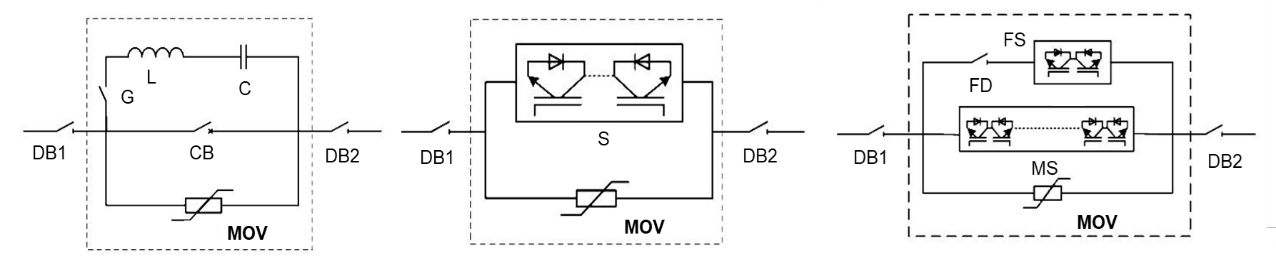
a) Mechanical type b) Power electronic type c) hybrid type
Fig. 1 Schematic diagram of the structure principle of HVDC circuit breaker. [4]
In principle, a HVDC CBs generally consists of three branches: the main branch (current branch), the conversion branch (disconnection branch), and the energy absorption branch, as shown in Figure 3. [1] The main branch is used to conduct the operating current of the DC system, requiring low on state losses. Generally, it is a mechanical switch component. To achieve current transfer during disconnection, some fully controlled power electronic (IGBT) components are also installed on the main branch. The transfer branch is a series of fully controlled power electronic devices such as IGBT or IGCT connected in series. Energy absorption branches are usually composed of MOVs.
Although there are differences in the internal components of different types of DC circuit breakers, the general breaking process is similar. The waveform diagram and timing definition of the DC circuit breaker during the isolation of DC faults are shown in Figure 4. [1] Among them, the red dashed line represents Transient Interruption Voltage (TIV); The solid blue line represents the Fault Current (FC), while the dashed blue line represents the Prospective Fault Current (PFC). The integral of TIV and FC over time during Fault Current Suppression Time (FCST) is the energy (MJ) that the energy absorption branch needs to absorb.
 a)
a) 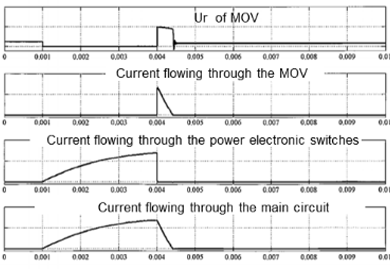 b)
b) 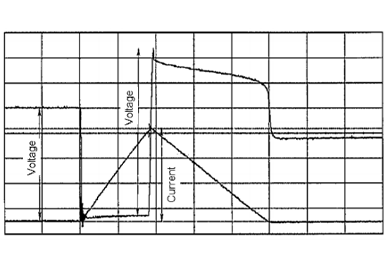 c)
c)
Fig. 2 Waveform diagram of LC test circuit for DC circuit breaker. [4]
a) Waveform Diagram of mechanical DC Circuit Breaker LC Test Circuit
b) Waveform diagram of LC test circuit for power electronic DC circuit breaker
c) Waveform diagram of LC test circuit for hybrid DC circuit breaker
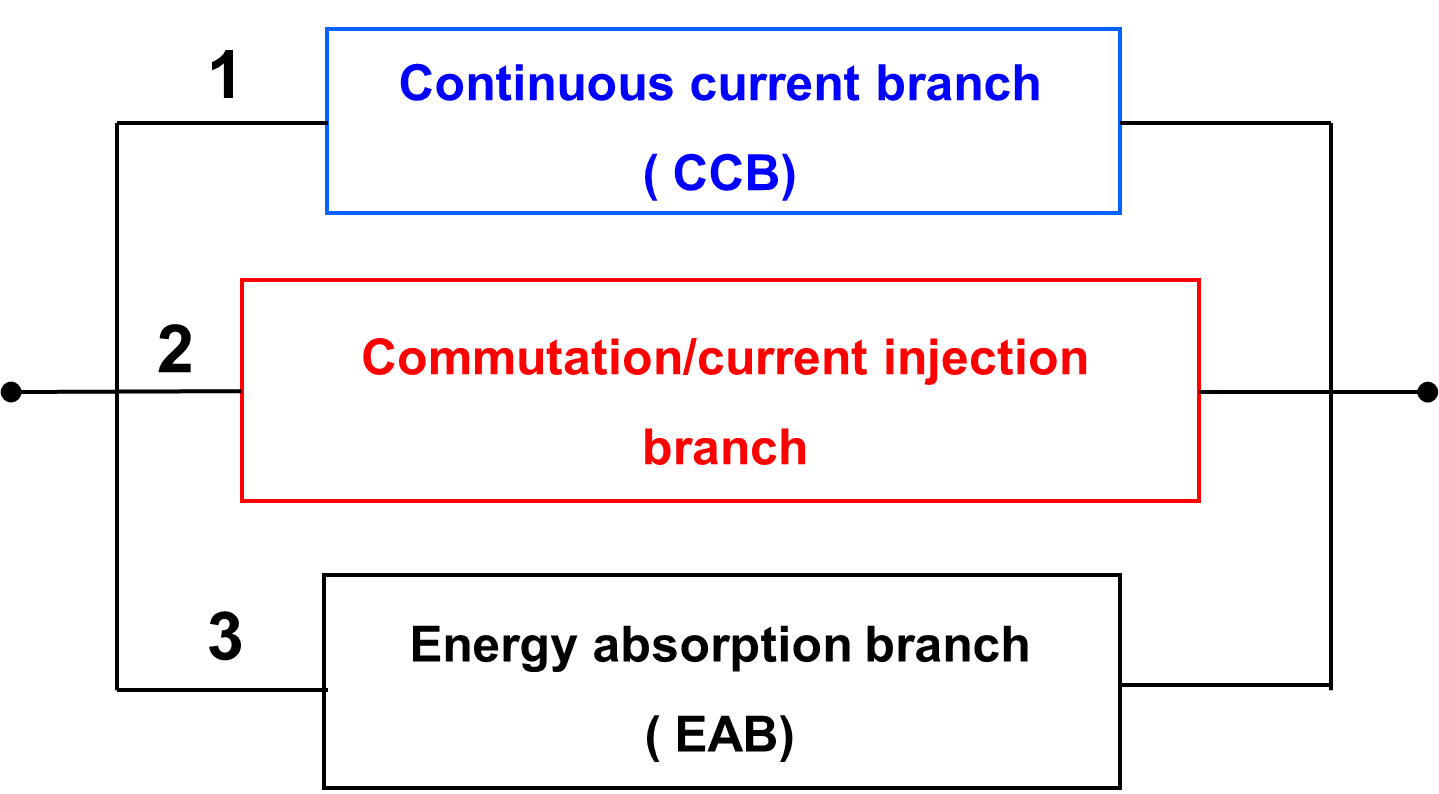 Fig.3 Schematic diagram of general HVDC circuit breaker branch. [1]
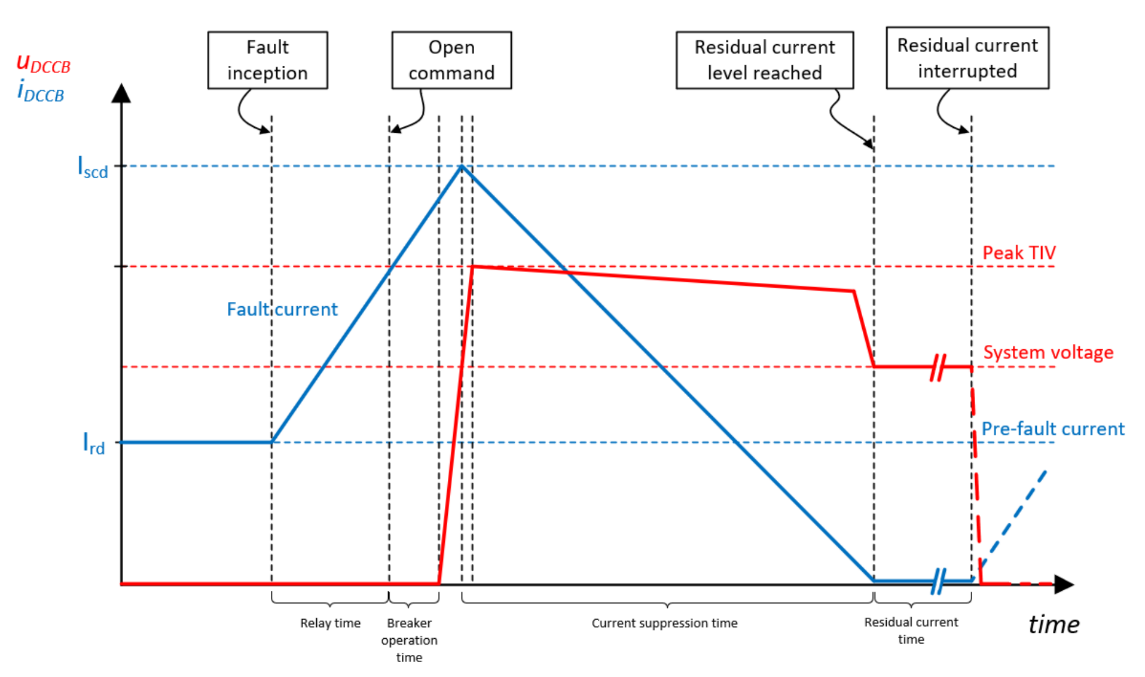
Fig.4 Schematic of wave traces and timing definitions during current interruption [1]
In the case we studied, for a HVDC CB, the maximum residual voltage (Peak TIV) of the energy absorption branch for a fault current of 9kA was ≤55kV, with a maximum value of 2.0MJ. The design scheme in the research case is a MOV structure with multiple columns in parallel.
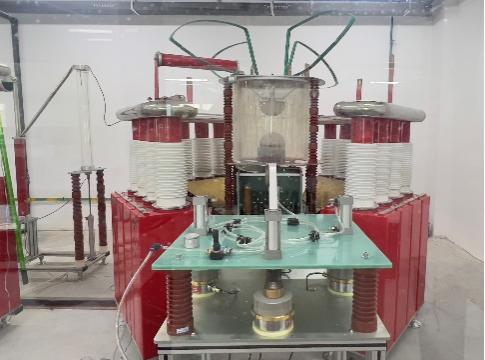
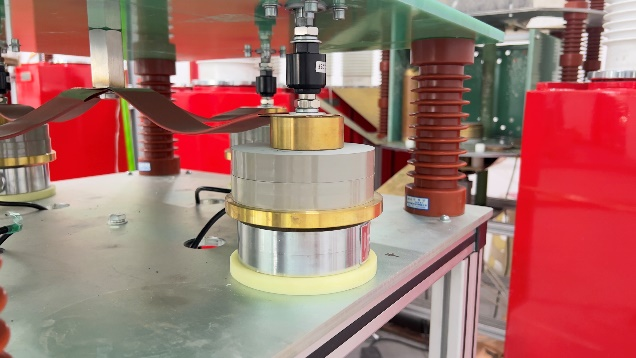
As shown in Figure 5, we have built a 4-post impulse current generator for 30/60、5kA switching current impulse. The schematic diagram of the test device is shown in Figure 6. The switching current impulse generator consists of a switching current impulse generation system, a control system, and a measurement system. The switching current system consists of a charging circuit and a discharging circuit. The capacitor bank C is charged through a voltage regulator (transformer) T, a rectifier silicon stack D, and a protective resistor R1. During operation, the triggering circuit sends out a triggering impulse to connect the discharge circuit, causing the already charged capacitor C to discharge through the discharge gap G, and causing an operating impulse current (30/60) to flow through the sample. The sample circuit adopts 4 channels, each channel uses a Rogowski coil to collect the current passing through the sample, and the signal is transmitted to the oscilloscope through the transmission unit. The oscilloscope adopts a 4-channel oscilloscope to synchronously collect and display the waveform of the switching impulse current.
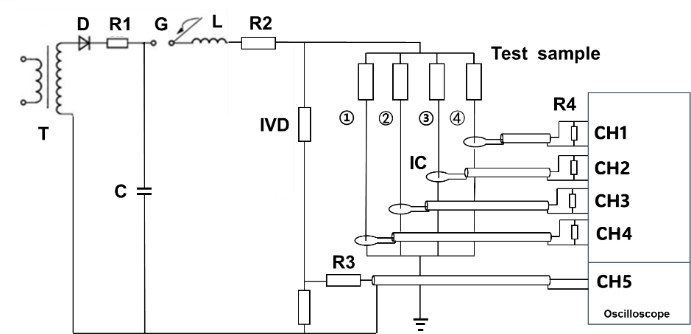
Fig.5 Circuit diagram for Switching current impulse testing and 4-post of MOV column sample
a)
b)
Fig.6 (a) Switching current impulse generator; (b) Installation photos of MOV samples and position of current sensing
The MOV evaluation test in this study involves 10 cycles, with each cycle containing 10 2ms square wave current impulse; Before conducting cyclic current impulse, measure the current distribution non-uniformity coefficient β of MOV under 30/60, the switching current impulse residual voltage of each MOV, and the DC reference voltage (Iref,DC=1mA). Then, repeat the measurement of the above three parameters after each cycle as indicators to determine whether MOV has deteriorated. Therefore, the MOV evaluation test in this study involves measuring the switching impulse current distribution β, reference voltage Uref 1mA DC, and residual voltage Ures 30/60 1kA throughout the entire life cycle, in order to find the inherent logical connections between them.
The test procedure is shown in Figure 7.
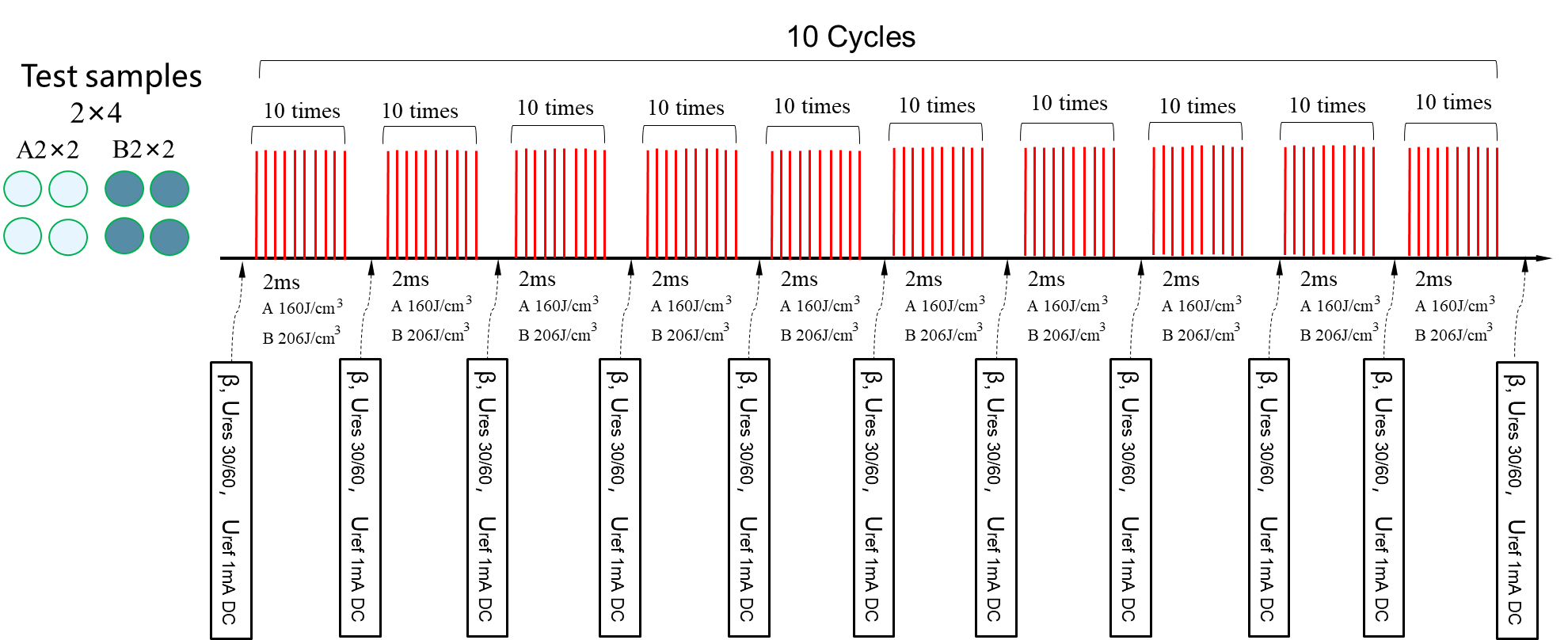
Fig. 7 Schematic diagram of impulse current distribution measurement and residual voltage and reference voltage measurement program throughout the entire life cycle
During the test, due to the limitations of the testing equipment's capabilities, we conducted a proportional unit test on the 2X4 column MOV. When injecting energy with 2ms [ W=160J/cm3 (2000A/2ms); 206J/cm3(2500A/2ms)], Conduct tests on individual pieces one by one; Subsequently, assemble the MOV columns according to the assembly order, and conduct a 30/60 switching current impulse distribution test, as well as test the current distribution non-uniformity coefficient β, the residual voltage Ures 30/60 1.2kA of each column, and the reference voltage Uref 1mA DC. Figure 8 is a waveform diagram of the test results.
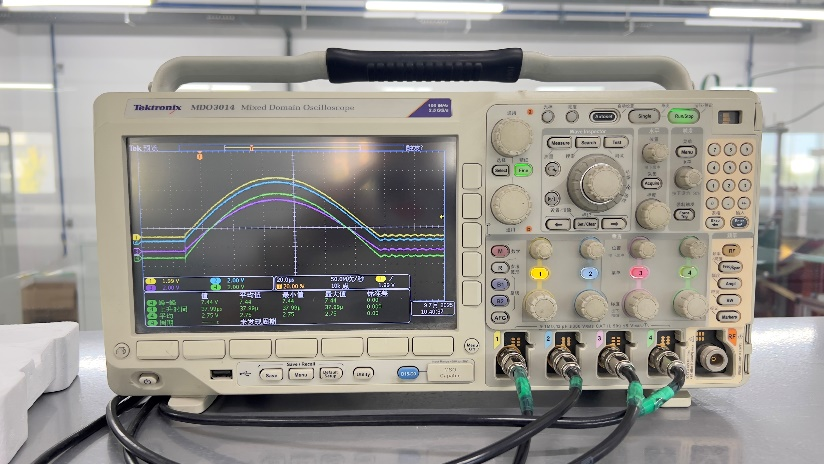
Fig.8 Voltage and current waveform diagrams in MOV switching current impulse distribution test
The data recorded according to the program diagram 7 is shown in Table 1.
Tab.1 Test data record form

Continued tab.1 test data record form

The energy absorption branch of the DC circuit breaker adopts a parallel structure of multi column metal oxide resistor (MOV) columns. Uneven distribution of switching impulse current between columns can cause local MOV to exceed their rated energy tolerance load, potentially leading to MOV column failures or even explosions [20]. According to studies [21, 22], the reason for the uneven increase in the distribution of surge current is due to the increase in the Fréchet distance (FD) of the dynamic volt-ampere (Volt Ampere) characteristic curve of the MOV caused by switching current impulse during operation.
In this test, we conducted the measurement using a proportional unit of 2X4 column MOV, all configured with MOV from the same batch. We have configured 2 sets of test samples, numbered as Group A and Group B. 2-pillar MOV in Group A were subjected to energy injection using 2000A/2ms (W=160J/cm3) in 10 cycles of testing; 2-pillar MOV in Group B were subjected to energy injection at 2500A/2ms (W=206J/cm3) during 10 cycles of testing.
Calculate the coefficient of uneven current distribution according to equation (1) :

(1)
Among them:
β, Uneven coefficient of maximum current distribution;
Imax, Maximum shunt current value of n-parallel MOV;
ΣIi,n, Sum of the shunt current values of the n-parallel MOV;
n, Number of parallel columns.
During the test when it reached the 9th cycle, the MOV on top of the 3rd Column (Group B) was punctured by the side edge on the 5th of the 10[2500A/2ms (W=206J/cm3)] energy injection tests, as shown in Figure 9. We subsequently replaced the backup MOV at this location and continued with the test procedure shown in Figure 9.
Table 2 shows the current distribution non-uniformity coefficient measured 11 times according to the test procedure in Figure 7. Figure 10 presents the maximum current distribution non-uniformity coefficient β variation curves for the 2X4 column, 2X2 column (Group A), and 2X2 column (Group B), respectively. From this, it can be seen that the value of the maximum current distribution non-uniformity coefficient β3 is≤1.10, which meets the engineering technical requirements according to traditional technical tests.
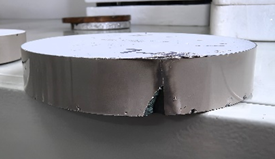
Fig.9 Photo of the MOV was broken down during the test (5th round of the 9th cycle)

Tab.2 Uneven coefficient of maximum current distribution β
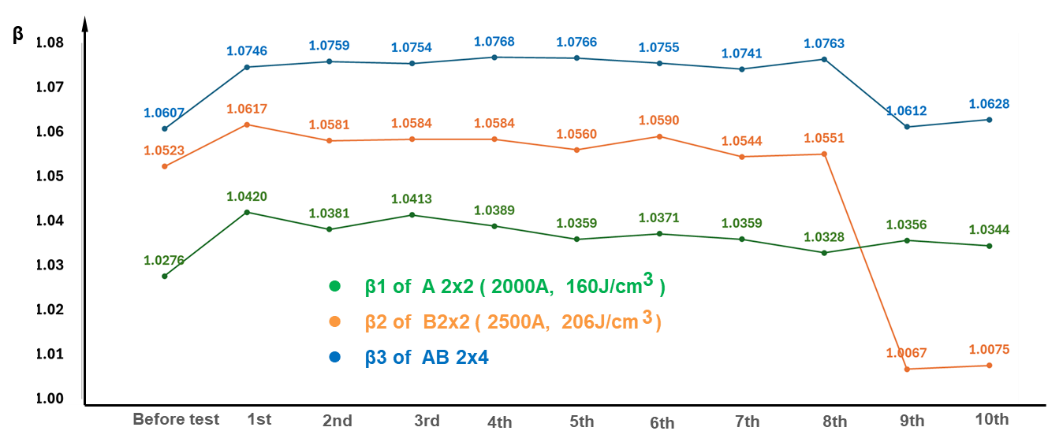
Fig.10 Trend chart of A value(β1 of A 2x2,β2 of B2x2, β3 of AB 2x4) changing with the number of test cycles
From the comparative analysis, it can be seen that:
1) The different changing trends of β1(2000A/2ms、W=160J/cm3) and β2 (2500A/2ms、W=206J/cm3) indicate that the selection of the rated energy of the MOV is very important. We need to conduct measurement verification for different current surge waveforms in specific engineering projects.
2) From Figure 10, it can be seen that before the 9th round, the values of β1、β2、β3 all showed an increase after the 1st round and did not fluctuate significantly thereafter. Indicating that the traditional current distribution test method has defects and cannot guarantee that the multi column MOV columns will always be within the range of β during actual operation. Multiple energy impulses may be required in traditional testing methods to achieve stability aging of the MOV under rated current impulse.
From Figure 11, it can be seen that at a certain rated absorption energy, the β increases significantly after the initial current impulse, and then tends to decrease with the increase of the number of current impulse. Of course, MOVs manufactured with different formulas and processes have different reactions. We need to understand the characteristic of MOV in practical engineering.
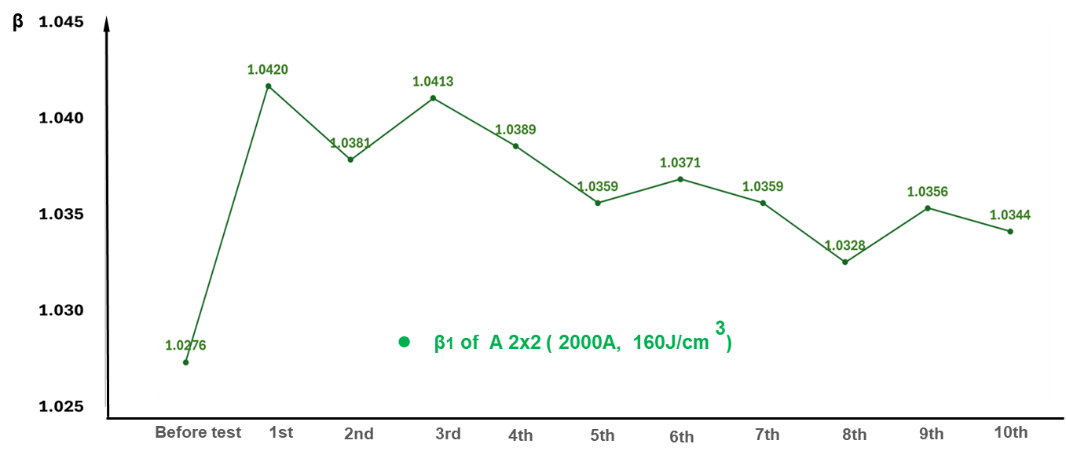
Fig.11 Trend chart of A value(β1 of A 2x2) changing with the number of test cycles
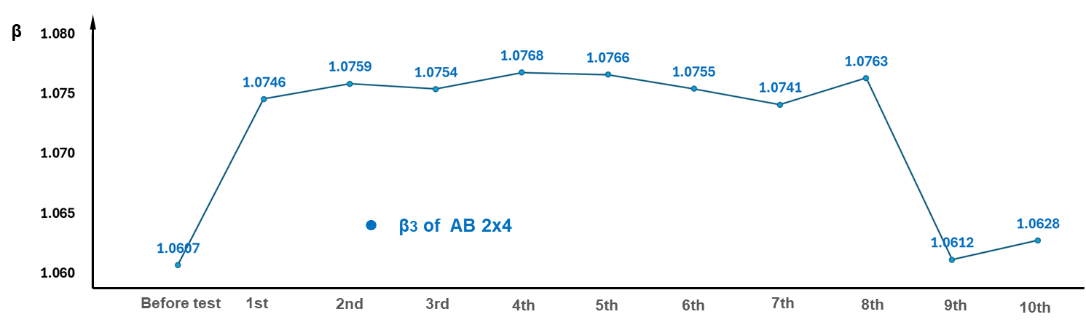
Fig.12 Trend chart of A value(β3 of AB 2x4) changing with the number of test cycles
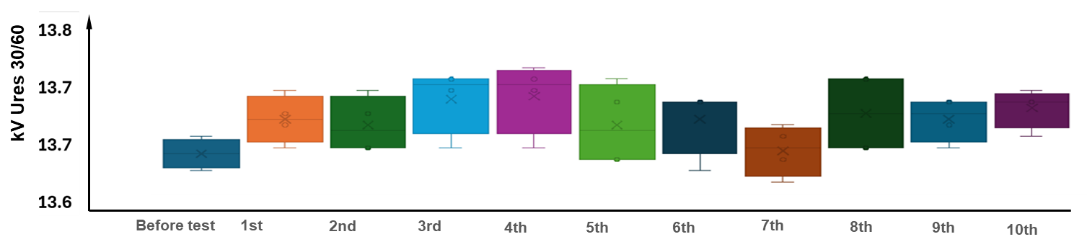
Fig.13 Trend chart of Ures 30/60 distribution on the 4 columns for each switching current impulse
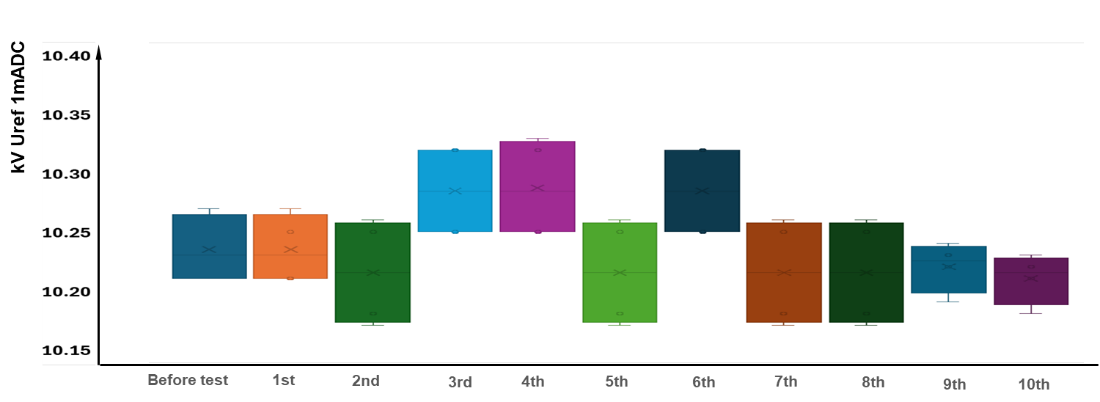
Fig.14 Trend chart of Uref 1mA DC distribution on the 4 columns for each switching current impulse
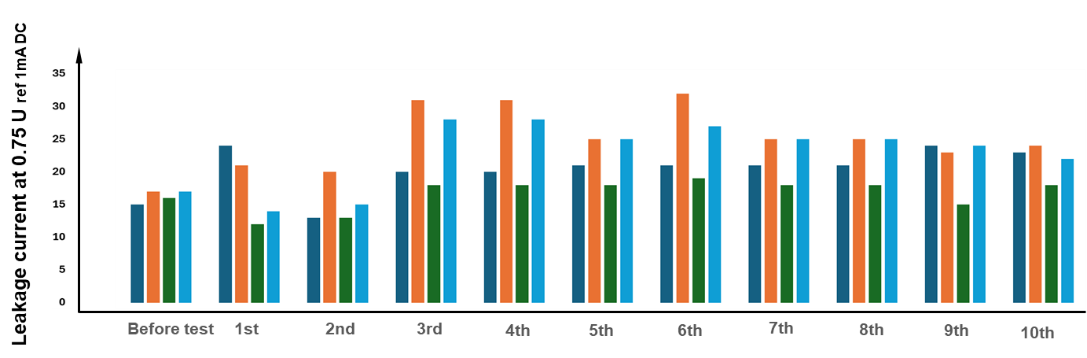
Fig.15 Leakage current at 0.75 Uref 1mA DC of the 4 columns after each switching current impulse
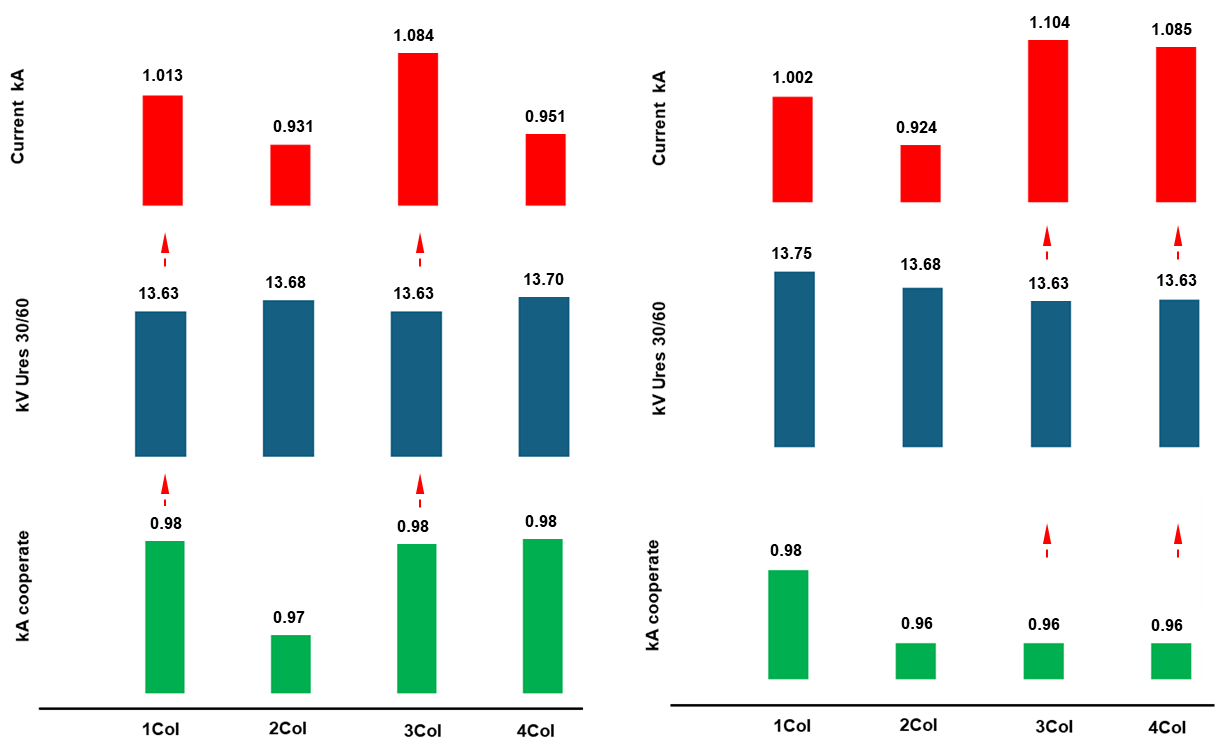
a) Analysis of the 5th test b) Analysis of the 10th test
Fig.16 Accuracy analysis comparison chart
3) From Figures 12, 13, it can be seen that the value of β is directly related to the operating residual voltage of each resistor column. The greater the dispersion of residual voltage, the higher the β value, and vice versa. Therefore, a smaller residual voltage change rate or a stable change rate has a significant impact on the operating life of the EAB.
From Figures 12, 14, and 15, it can be seen that there is no direct relationship between the β value and the variation of the DC reference voltage of each MOV column. There is no direct correlation between the impact of multiple current impulse on the U-I characteristics of the pre breakdown region of the MOVS during its lifespan and the β value of the operating current impulse of each MOV column.
4) When analyzing the data, we found that in the 5th and 10th cycle, Figures 16,under the same 30/60 peak switching impulse current, the residual voltage value of the MOV column was the same, but the switching impulse distribution current value was different. Unfortunately, there is currently no established standard device for current impulse internationally, so there is an urgent need to conduct research on the traceability of current impulse values [23,24,25]. The German Federal Institute of Physical Technology (PTB) has established a 20kA (8/20μs) standard measurement system for current impulse, with a measurement uncertainty of 5×10⁻³ (k=2) for scale factor and 2×10⁻² (k=2) for time parameter. In actual engineering design, the error of β value in routine tests should be considered.
This article conducts an in-depth study on the shunt characteristics of the EAB of a DC circuit breaker throughout its entire lifecycle. Establish a MOV impulse current energy absorption testing platform, provide testing plans and programs to simulate actual working conditions, and systematically study the shunt characteristics of EAB throughout its entire life cycle. Compared with conventional metal oxide surge arresters, the studied MOV has obvious characteristics in operation.
1) The actual operating conditions of EAB determine that it will withstand impacts exceeding its rated withstand energy hundreds of times, and it is necessary to ensure that the rate of change of residual voltage tends to be consistent in order to ensure stable operation throughout its entire life cycle. It is crucial to select MOVs with suitable rated withstand energy values and good residual voltage stability after hundreds of current impulses.
2) Further research is needed to develop measurement techniques for the maximum switching impulse current distribution non-uniformity coefficient in the actual manufacturing process.
3) Next, we need to investigate the shunt characteristics of the EAB of the DC circuit breaker during its entire lifecycle under current surges with a duration of 10~15ms. This is closer to the actual operating conditions of the project.
We also need to pay attention to the operation of EBA in DC circuit breakers that have been put into operation, especially cases where online monitoring systems have been added [18,26]. These are of great significance for us to plan our next research content.
[1] Cigre WG3.30. TB931-Technical requirements and field experiences with MV DC switching equipment [R]. Paris: Cigre,2021.
[2] Editorial Committee of Flexible DC Power Grid Engineering Technology Series
Structure and Principle of High Voltage DC Circuit Breaker [M] Beijing: China Electric Power Press,2021.
[3] State Administration for Market Regulation, National Standardization Administration. GB/T38328-2019 Common Technical Requirements for High Voltage DC Circuit Breakers for Flexible DC Systems [S]. Beijing: China Standard Press, 2019
[4] National Energy Administration. NB/T42107-2017 High Voltage DC Circuit Breaker [S]. Beijing: China Electric Power Press, 2017
[5] General Administration of Quality Supervision, Inspection and Quarantine of the People's Republic of China, China National Standardization Administration. GB/T25309-2010 High Voltage DC Converter Switch [S]. Beijing: China Electric Power Press, 2010
[6] IECTS62271-313:2024 High-voltage switchgear and controlgear – Part 313: Direct current circuit breakers [S]. Geneva: International Electrotechnical Commission(IEC),2024.
[7] Yang Bing, Shi Wei, Fang Taixun, et al. Key technology of MOVs in Energy dissipation branch of HVDC circuit breaker [J]. High Voltage Engineering, 2021,Vol.47, No.9:3208-3217.
[8] Weijiang Chen, Rong Zeng, Junjia He, et al. Development and prospect of direct‐current circuit breaker in China [J]. High Voltage, 2021,6: 1–15.
[9] Maike Broker, Volker Hinrichsen. Testing Metal -oxide varistors for HVDC breaker application [J]. IEEE Transaction on power delivery, Vol.34, No.1, February 2019: 346 –352.
[10] Peter Hock, Volker Hinrichwen, Nadew Relda, et al. Investigations of Metal -oxide surge arresters for HVDC breaker application [J]. INMR World congress USA Oct. 20-23, 2019: 1-17.
[11] Xinyi Wang, Yiying Liu, Yilei Lv, et al. Investigations of impulse aging of energy-absorption elements for Hybrid DC circuit breaker [J]. Applied Science, 13(9784), 2023: 1-22.
[12] Nadew Adisu Belda, Rene Peter Paul Smeets, Roy Maarten Nijman. Experimental Investigation of Electrical stresses on the main components of HVDC circuit breaker [J]. IEEE Transaction on power delivery, Vol.34, No.1, February 2020: 1 –10.
[13] Chunmeng Xu, Andrew Rockhill, Zhi Jin Zheng, et al. Evaluation tests of Metal oxide varistors for DC circuit breakers [J]. Power and Energy, Vol.9, 2022: 254 –264.
[14] Chen Long, Yifei Wu, Yi Wu, et al. Research on influence of double energy absorptions on dynamic volt‐ampere characteristics of metal oxide varistors [J]. High Voltage, Vol.3, 2025: 78–87.
[15] Li Jinbo, Li Zhengdong, Liu Xianhui, et al. Application of HVDC circuit breaker in Zhangbei fexible DC power grid [J]. Northeast Electric Power Technology, 2024,Vol.45, No.1:25-29.
[16] Peng Zhaowei, Gao Peng, Song Jie, et al. A fault detection method based on empirical Fourier decomposition for the energy absorption branch of Hybrid high voltage DC circuit breakers [J]. Journal of Global Energy Interconnection, 2024,Vol.7, No.1:79-91.
[17] Jie Gao, Huan Yuan, Aijun Yang, et al. A failure detection method based on Multivariate variational mode decomposition and skewness for modular DC circuit breakers [J]. Electric Power and Energy Systems, Vol.34, No.2, February 2023: 1 –10.
[18] Liu Jinsong, Yu Jinyun, Zhang Qihao, et al. Design and application of action current monitoring device of DC transfer switch arrester in HVDC station [J]. Automatic Control Systems & Equipments, 2021,Vol.42, No.4:84-86
[19] Lv Jinzhuang, Wang Guoli. Key Technology Research and Practice of Switching Equipment for High Voltage/Ultra High Voltage DC Systems (PPT) [J]. IEEE Zhuhai Academic Conferences, 2024.
[20] Technical trend of zinc oxide surge arresters and technical trends on energy saving.
Current status of operation and energy saving of zinc oxide arresters. Japan Electrical Society Technical Report No. 1544, 2023.
[21] Longchen,Xiao Yu,Yang Feio, et al. Research on MOV Equilibrium Characteristic and Selecting Method in DC Fault Interruption [J]. High Voltage Apparatus,2023,Vol.59, No.12:1-9.
[22] Chen Long,Yi feiWu,Yi Wu, et al. Research on influence of double energy absorptions on dynamic volt‐ampere characteristics of metal oxide varistors [J]. High Voltage,2025,Vol.10: 78–87.
[23] Zhou Feng, Li He, Li Wenting, et al. Review of High Current Measurement and Sensing Technology [J]. High Voltage Engineering,2021, Vol.47, No.6: 1905-1920.
[24] Long Zhaozhi,Liu Shaobo,Li Wenting, et al. Establishment of 100 kA Impulse Current Standard Measurement System [J]. High Voltage Apparatus,2021, Vol.57,No.11:0171–0179.
[25] He Chibin. Study on Performance Test Method and Calibration of Impulse Current Measuring Device [D]. Huazhong University of Science and Technology,2021.
[26] Lv Jinzhuang, Wang Guoli. Research and Practice of Key Technologies for Switching Equipment in High Voltage/Ultra High Voltage DC Systems [J]. IEEE Zhuhai Conference,2024.
_____________________________________________________________________________________________________________
 He obtained a degree in Chemical Engineering from Henan University in 1992.
Technical Director of Xi'an Tiangong Electric Co., Ltd.
Member of the National Technical Committee for Standardization of Surge Arresters in China.
Member of the Electrical Ceramics Professional Committee of the China Electrotechnical Society.
Member of IEEE PC37.01 HVDC CB working group.
Hosted the drafting of the national standard GB/T34869-2017 and participated in the drafting of multiple national and industry standards.
_______________________________________________________________________________________________________________
 English