
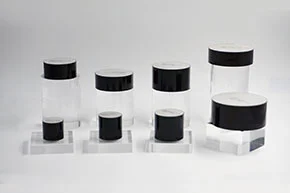
It is a type of overvoltage protection device that is commonly used in DC arresters. It works by diverting excess current away from the protected circuit and dissipating it as heat. This prevents the circuit from being damaged by excessive voltage. MOVs are typically made from a combination of zinc oxide and other metal oxides and offer excellent protection against surges and spikes in voltage.
Get a Quote 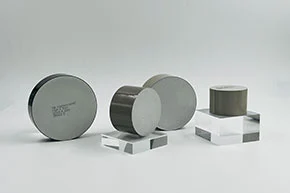
Voltage rating: The MOV arrester must have a voltage rating that is higher than the maximum system voltage.
Surge protection rating: The MOV arrester must have a surge protection rating that is sufficient to protect the system from transients and other surges.
Current-handling capacity: The MOV arrester must be able to handle the system's maximum current load.
Installation and maintenance: The MOV arrester must be easy to install and maintain.
DC and HVDC surge arresters impose different stresses on MOV blocks than conventional AC systems. In addition to impulse energy, the MOV design must consider continuous DC voltage, polarity-related operating conditions, power loss and long-term stability.
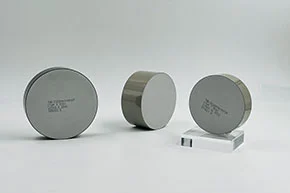
TGE develops MOV blocks for DC arrester applications in diameters from approximately 70 mm to 115 mm. Material formulation and manufacturing processes are optimized to support stable electrical characteristics under DC service, including applications where mixed AC/DC stresses or polarity-reversal conditions must be considered in the overall arrester design.

MOV arresters are designed to reduce interference in DC power systems by providing protection against transient voltage spikes. These surges can be caused by a variety of sources, such as lightning strikes, electromagnetic interference, and other power disturbances. MOV arresters can be used to reduce the effects of these disturbances by providing a low impedance path that quickly diverts the transient voltage away from the DC power system. This helps to protect sensitive electronics from being damaged or malfunctioning due to voltage spikes. Additionally, MOV arresters can help reduce noise and other types of interference in the signal, improving system performance.

Welcome to TGE's Customer Connect Center. Experienced specialists are here for you 365 days a year.
No.1616 TianZhang Avenue, Feng Dong Xin Cheng, Xi'an, China.
 English