Selecting a distribution class surge arrester requires more than choosing a rated voltage from a table. The arrester must be coordinated with the network grounding method, temporary overvoltage conditions, expected surge duty, equipment insulation level and the installation environment.
A practical selection process can be divided into four stages: identify the system parameters, determine the electrical ratings, verify the construction and environment, and complete the final coordination check.
Parameter | Why it matters |
Highest system voltage (Us) | Basis for determining continuous operating and rated voltage |
Neutral grounding method | Determines temporary overvoltage magnitude and duration |
Short-circuit current level | Used to verify arrester short-circuit withstand / pressure-relief capability |
Equipment BIL / LIWV | Used to check the protective margin between arrester residual voltage and equipment insulation |
For an effectively grounded system, the source catalogue uses Uc ≥ Us / √3 plus a 5% safety margin as the basic selection principle. For non-effectively grounded or isolated systems, Uc must account for the higher phase-to-ground voltage during earth-fault conditions.
After Uc and Ur are selected, the expected lightning duty should be compared with the arrester's repetitive charge transfer capability. A key point in the source catalogue is that the charge of a single lightning flash should be compared with Qrs rather than Qth. Qth represents thermal charge capability and should not be used as a substitute for the single-event charge limit.
Residual voltage (Ures) defines the arrester's clamping level during the specified impulse current. It must be coordinated with the LIWV/BIL of the protected equipment. Connection lead inductance, travelling-wave reflections and currents above nominal discharge current can increase the effective voltage at the equipment terminals.
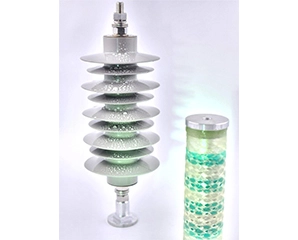
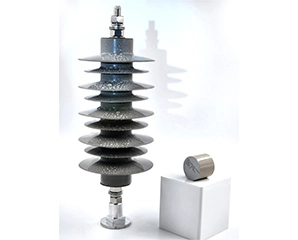
The external design should then be checked for mechanical strength, sealing, creepage distance and pollution conditions. For modern polymer distribution arresters, directly molded silicone-rubber designs provide a strong bonding interface between the housing and the active part, reducing moisture-ingress risk.
Ur and Uc match the system voltage and grounding method.
Distribution class and Qrs/Qth are adequate for the expected surge duty.
Ures provides sufficient insulation coordination margin.
Short-circuit, mechanical and environmental requirements are satisfied.
The correct accessories and mounting hardware are selected.
 English